



Why grounding notes? Yin is slow and inward; warm woods feel congruent with settling and stillness.
Does scent go in the hall? No. Students lie still and breathe slowly for long holds — the practice room stays unscented.
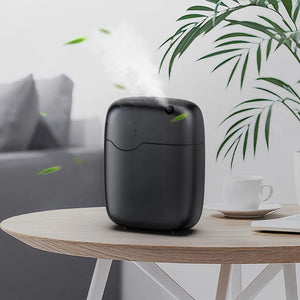
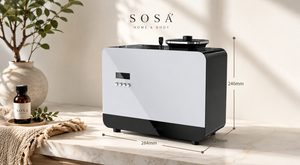
2. At the threshold. Hold the warm note at the entrance and reception on a Vaayu (₹11,999), or a Sukoon (₹1,799) for a single small studio.
3. Nothing in the hall. Students hold poses for minutes and breathe slowly — the practice room needs clean air, not fragrance.
4. A trace in the changing rooms. A Boond (₹799) keeps the side rooms softly warm.
5. Keep it restrained. Grounding must not tip into heavy incense — a whisper of warmth, not a cloud.
And a portion of every order supports girl-child education through Nanhi Kali.
Why yin wants a grounding note
Where power yoga is an engine, yin is ballast. The practice works through long, passive holds — three, five, sometimes eight minutes in a single shape — asking connective tissue to release and the mind to stop bracing. Everything about the room is built to help a student sink: dim light, bolsters, silence, warmth. The scent that meets them at the door should belong to that same gravity. A bright, awake green-citrus, so right for a power room, feels jangly here — it lifts when the whole practice is trying to lower.
Grounding notes do the congruent thing. Sandalwood has a soft, warm, almost milky depth; vetiver brings a dry, rooty earthiness that reads as settled. Held gently at the threshold, either one tells the nervous system, before a single word is spoken, that this is a place to slow down. The note should feel like weight arriving in the body — the same thing the practice is about to ask for.
Casting sandalwood and vetiver
| Note | What it does at the door |
|---|---|
| Sandalwood | Soft, warm, milky depth — reads as calm and settled |
| Vetiver | Dry, rooty earthiness — grounding without sweetness |
| A trace of cedar | Quiet backbone under the warmth |
| White tea (for a lighter room) | Near-neutral, barely there — for the most minimal studios |
 Sukoon · small studio₹1,799Shop → Vaayu · reception standard₹11,999Shop →
  Hotel Collection · sandalwoodfrom ₹299Shop →
Keeping the still hall clean
Yin makes the case for an unscented hall more clearly than any other practice. In a fast class, a student is moving and their attention is outward; in yin, they are lying still in a dim room for long minutes, breathing slowly and deeply, attention turned all the way in. That is precisely the condition under which ambient fragrance becomes intrusive — there is nothing to distract from it, and every slow breath draws it deeper. A note that seemed gentle at the door would, over an eight-minute hold, become the only thing a student could think about.
So the hall stays clean, aired between classes, its air as neutral as you can make it. The grounding signature lives entirely at the threshold — a Vaayu at ₹11,999 with its timer set to run before class and rest once students are settled, or for a single small studio a Sukoon at ₹1,799 doing the same job at gentler scale. A student walks in from the street, meets the warm note at the door, carries the feeling of it to their bolster — and then practises in clean, quiet air. The scent frames the stillness without ever entering it.
The SOSA commercial edit
Lead with a Vaayu at the threshold, or a Sukoon for one small room, and keep the still hall clean. Prices are exact.
| System | Best for | Why it works | Price |
|---|---|---|---|
| Boond | Changing rooms, washrooms, shoe-rack corners | Small, water-based, holds a side zone to a trace | ₹799 |
| Sukoon + Hotel Collection | A single small yin studio’s reception — a gentle lead pick | Gentle ultrasonic diffusion for one compact front-of-house | ₹1,799 + ₹299 |
| SOSA Vaayu ★ | Reception, corridor, lobby — the studio standard | Waterless, app + timer, up to ~1000m³, under 38dB | ₹11,999 |
| SOSA Aangan | Whole wellness centre via ducting, 8,000–10,000 sq ft | One signature front-of-house; halls on their own zone | ₹25,999 |
| Hotel Collection refills | Keeping the threshold running | The real running cost — low and predictable | from ₹999 |
Versailles
Yin is my own favourite practice to scent, precisely because it demands the most restraint. A grounding note — a soft sandalwood, a dry vetiver — is one of the loveliest things a threshold can offer. It meets a student exactly where the practice wants to take them: down, and inward.
But the same qualities that make it lovely make it dangerous in the hall. Held over a long, still hold, warmth becomes weight, and weight becomes too much. So I keep it at the door, always a whisper, and I leave the practice room clean.
That is the whole craft of a yin signature: grounding enough to be felt at the threshold, light enough to be missed only when it is gone. Your studio gains a mood; a girl gains a classroom through Nanhi Kali.
Frequently asked questions
- Best fragrance for boutique yoga studios — one characterful note for a small room.
- Best fragrance for power yoga studios — the lifting green-citrus counterpoint.
- Yoga studio scent marketing — the pillar guide.
- Brand: the SOSA founder story.
Facts verified August 2026: the evidence on ambient scent is that effects on dwell, perceived quality and recall are real but moderate, that scent-environment congruence matters more than intensity, and that no fragrance improves an unclean or poorly ventilated space — which is why the practice hall itself is left unscented and ventilated. SOSA systems and prices as stated: Boond ₹799, Sukoon ₹1,799, Megh ₹3,499, Vaayu ₹11,999, Aangan ₹25,999, Meenar ₹38,500, Hotel Collection scents from ₹299, refills from ₹999. The Hotel Collection scents are SOSA's own interpretations inspired by the world's finest hotels; SOSA is an independent Indian fragrance house, not affiliated with or endorsed by any hotel brand. Prices subject to change.